Design a JSON content contract that travels
Define field meaning, ownership, body formats, validation, and versioning before connecting content to multiple destinations.
7 MIN READRead the guide
Make the path from draft to destination easier to understand. Practical guides to publishing APIs, AI review, WordPress, static websites, newsletters, and RSS.
Start with the six-point publishing checklist
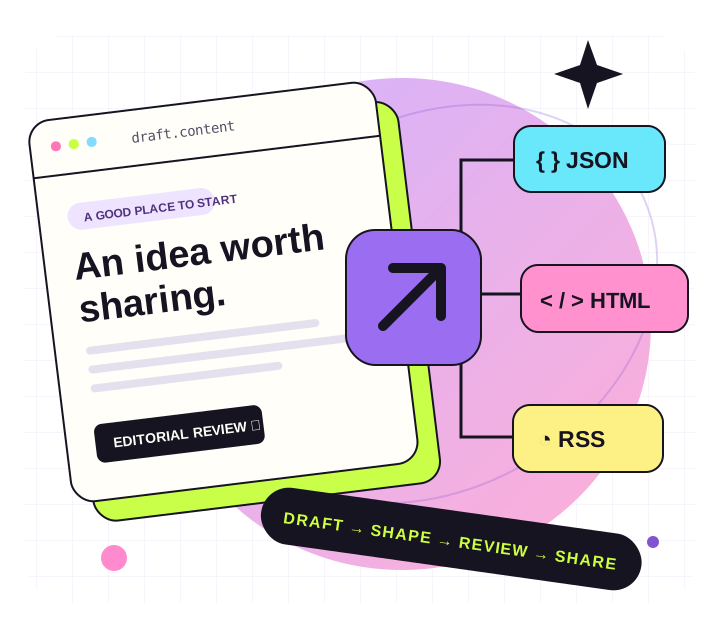
Start with the question you have, not the tool you use. Explore six connected collections, from an idea’s first draft to the infrastructure behind its release.
Understand what happens between an approved draft and a public page. Start with content identity, editorial state, and a definition of what a completed release actually means.
Make room for better ideas without giving up editorial control. Explore bounded prompts, structured drafts, source review, and a deliberate human approval step.
Choose the right home for the story. Explore CMS drafts, static websites, page builders, and the practical boundaries between authoring, previewing, and releasing.
Keep meaning portable and implementation details explicit. Explore JSON contracts, semantic HTML, presentation layers, and publishing clients in your preferred stack.
Give every channel a considered version of the story. Plan newsletters, email, social adaptations, bookmarks, and RSS around a clear canonical source.
Connect content to its operational home. Think through domains, deployment, access, recovery, mobile clients, and the limits of technical labels.
A better workflow gives ideas room to grow and evidence room to matter. Explore prompts, structured drafts, and human review before anything becomes a public claim.
// An idea, ready for review.
{
  "title": "A story worth sharing",
  "source": "editorial brief",
  "format": "structured draft",
  "review": "human required",
  "next": "choose a destination"
}
Illustrative content model. Not a live endpoint or API response.
Drafts, media, metadata, and a deliberate transition from review to public.
Content files, generated pages, and a complete release you can inspect.
A story on the web. A separate editorial decision for the inbox.
HTML, custom builders, and folder-to-website paths that fit your project.
Platform names are editorial references, not partnerships or included integrations.
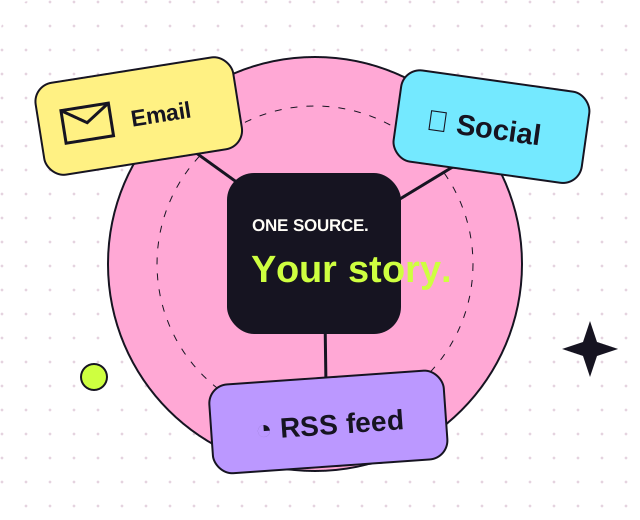
One story can take different shapes. Learn how to keep a canonical source while adapting your message for a newsletter, a feed, or a social audience.
From the record’s first field to the release’s last file, make the invisible decisions easier to understand.
Define what each field means before asking a destination to interpret it.
Keep preparation, delivery, and reporting separate in the language you work with.
Plan the document root, the deployment identity, and the way back.
Define field meaning, ownership, body formats, validation, and versioning before connecting content to multiple destinations.
Keep receipt separate from completion and design for duplicate events, delayed revisions, and uncertain destination results.
Map a complete post, preserve its destination identity, preview the theme, and make publication a deliberate editorial step.
Here is what this field guide is—and what it is not.
Choose a topic. Understand the tradeoffs. Find a clearer path from your first draft to its next destination.